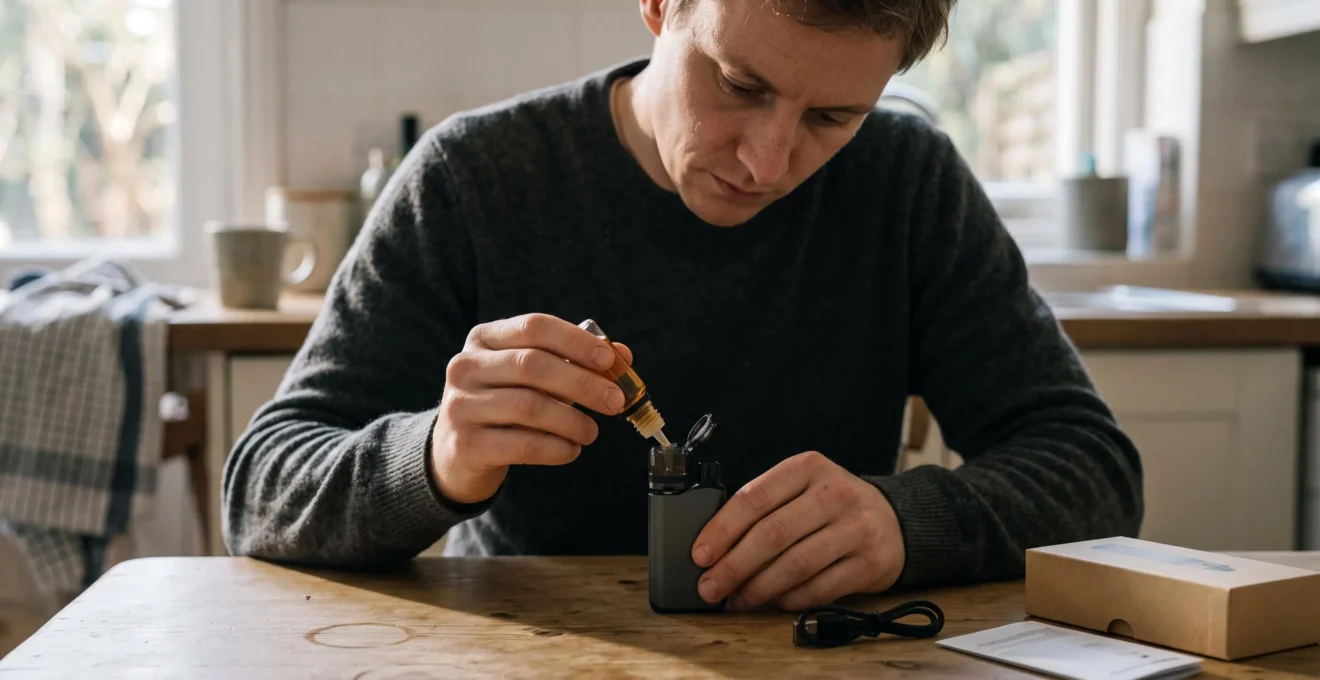
An all-in-one vape kit makes more sense than separate components when straightforward setup, predictable compatibility and a manageable maintenance routine matter more than extensive customisation. By combining a battery, an integrated tank or pod connection and a manufacturer-matched heating system, these devices reduce the number of component decisions an adult user must make.
The trade-off becomes apparent over time. An integrated kit may be convenient to refill and maintain, but proprietary replacement parts, sealed batteries and limited repair options can make ownership less flexible. A modular device requires more technical understanding, yet its replaceable components may remain useful for longer.
The distinction is particularly relevant to adults who already vape or are switching away from smoking. Device choice should reflect actual use, replacement-part availability and the ability to follow battery safety instructions. It should not be based on the assumption that a more powerful or complicated device delivers a better result. Vaping is not risk-free, and people who do not smoke should not start vaping.
All-in-one vape kits: the essential trade-offs
- Choose integration for simplicity: manufacturer-matched components reduce compatibility checks and usually require fewer settings.
- Compare the ongoing workload: integrated kits simplify routine care, while modular devices offer more control over repairs and individual parts.
- Check replacement parts before choosing: an easy-to-use device can become inconvenient if its pods, coils or battery cannot be replaced economically.
- Why Are All-in-One Vape Kits Easier to Set Up for Many Users?
- How Can You Set Up an All-in-One Vape Kit Without Missing a Critical Step?
- All-in-One Kit or Modular Vape: Which Better Fits a Low-Maintenance Routine?
- What Are the Main Drawbacks of Replacing Parts in an All-in-One Vape?
- When Is an All-in-One Vape Kit No Longer Worth Repairing?
- How Can You Narrow Down Vape Device Types Without Comparing Every Model?
- When Should You Move from a Pod System to Another Vape Format?
- How Can You Check Whether Vape Components Are Actually Compatible?
Why Are All-in-One Vape Kits Easier to Set Up for Many Users?
All-in-one vape kits are generally easier to set up because their main components are designed to work together from the outset. Users do not need to select a separate tank, match a coil to an unfamiliar power system or assemble several independently purchased parts. This reduces initial decisions, although correct filling, charging and coil preparation remain essential.
The central advantage is manufacturer-controlled compatibility. In a typical integrated kit, the supported coil resistance, available power and airflow design are already accounted for within the device’s intended operating configuration. The user selects a compatible replacement pod or coil rather than constructing an entirely new combination.
This limits several avoidable setup mistakes:
- Installing a coil that the device cannot operate within its supported resistance range.
- Combining airflow and power settings that are poorly suited to the intended coil.
- Using inappropriate batteries or charging equipment selected separately from the device.
Not every all-in-one kit eliminates these decisions entirely. Some offer interchangeable coils, variable power or airflow adjustment. Their controls still need to be used within the manufacturer’s specifications.
The learning curve is another distinction. A basic integrated device may require only familiarisation with filling, charging, preparing the coil and activating the device. A more configurable modular system requires additional attention to coil ratings, electrical limits, output settings and, when applicable, removable-battery handling.
The NHS guidance on choosing and using a vape distinguishes straightforward pod devices and vape pens from customisable vape mods, noting that mods are more difficult to use and need more maintenance. Its guidance concerns adults using vaping as an alternative to smoking, rather than a measured comparison of every device configuration.
A simpler initial setup can also reduce the expense of purchasing unsuitable parts. For example, a coil operated outside its recommended wattage range may produce a burnt taste or perform poorly. Manufacturer-matched configurations narrow this possibility, but built-in short-circuit or resistance protections should never be treated as guarantees against every malfunction.
Time spent preparing the device correctly is therefore a useful decision criterion. An integrated kit can reduce the amount of technical preparation required before use without eliminating the need to understand its instructions.
Once the components are matched, correct preparation becomes the next priority. Even a simple integrated device can deliver poor results when its coil is used before the wick is adequately saturated.
How Can You Set Up an All-in-One Vape Kit Without Missing a Critical Step?
To set up an all-in-one vape kit correctly, read its manual, prepare the compatible coil or pod, fill the reservoir where applicable, allow the wick to saturate and charge the device using approved equipment. If power adjustment is available, begin within the coil manufacturer’s recommended range. The exact sequence depends on the device’s design.
The most consequential preparation error is often inadequate coil priming. A replaceable coil usually contains an absorbent wick that must receive sufficient e-liquid before the heating element is activated. If the wick is still dry, heating may scorch its material, producing a persistent burnt taste and potentially requiring replacement.
For replaceable coils with accessible wick openings, manufacturer instructions may call for applying a small quantity of e-liquid directly before installation. Sealed and prefilled pods are different: users should not attempt to dismantle them or apply instructions intended for an exposed replaceable coil.
According to Innokin’s device setup and maintenance instructions, the preparation of relevant replaceable coils includes applying two or three drops of e-liquid to the wick openings and allowing the filled atomiser to saturate for 10 minutes. That is a manufacturer-specific procedure, not a universal requirement for all kits.
Preparation should also account for filling design. A top-fill reservoir, removable pod and sealed prefilled cartridge do not all follow the same procedure. Airflow may be adjusted before or after filling when the manufacturer permits it; there is no general requirement to set airflow beforehand.
Five checks before first use
- Identify the exact device and pod or coil: locate the manual and verify that the installed consumable is listed as compatible.
- Prepare the wick: follow the relevant priming instructions and confirm that the specified saturation period has elapsed before activating a new coil.
- Check the reservoir: fill through the designated port, where applicable, and confirm that the seal is closed and no liquid is escaping.
- Confirm charging and settings: use approved charging equipment, follow the charging instructions and verify that adjustable power remains within the coil’s stated operating range.
- Carry out an initial operating check: inspect for leaks or error indicators and, where the manual permits testing, confirm that vapour production and flavour are normal without persistent burning or abnormal noises.
After preparation, some devices may permit gentle unpowered draws to check airflow. This is not a universal setup requirement. Where adjustable power is available, initial operation should follow the manufacturer’s recommended lower operating range rather than an arbitrary setting.
Normal operation should not produce persistent burnt flavour, pronounced leaking, unusual heat or electrical error warnings. These symptoms warrant stopping use and consulting the device’s troubleshooting instructions. A severely scorched wick may need replacement; additional soaking will not necessarily restore it.
Correct setup prevents avoidable problems, but the more revealing distinction between integrated and modular devices emerges in their recurring maintenance demands.
All-in-One Kit or Modular Vape: Which Better Fits a Low-Maintenance Routine?
An all-in-one kit usually suits a low-maintenance routine when the user wants predictable refilling, straightforward consumable replacement and minimal settings management. A modular vape can be more practical when individual components require frequent replacement or battery flexibility matters. The better choice depends on the complete ownership routine, not simply the number of parts.
For an occasional or moderate user, the repeated tasks associated with an integrated device may be limited to charging, refilling, cleaning accessible contacts and replacing a worn pod or coil. A modular configuration introduces the possibility of cleaning a separate tank, managing adjustable output, checking connections and maintaining removable batteries where fitted.
The comparison becomes clearer when each maintenance activity is examined separately.
| Maintenance criterion | All-in-one kit | Modular vape |
|---|---|---|
| Coil replacement | Replace the compatible pod or coil when performance declines. | Replace a compatible coil head or maintain the chosen atomiser. |
| Refilling | Typically uses an integrated fill port or replaceable pod. | Depends on the separately chosen tank or atomiser. |
| Cleaning | Usually focuses on the pod, contacts and accessible surfaces. | May also include disassembling and cleaning tank components. |
| Charging | Often relies on the internal battery and its charging port. | May use internal charging or compatible removable batteries and an approved charger. |
| Settings and firmware | Often fixed or limited; some models allow adjustments. | May involve more settings and, where supported, firmware management. |
| Unexpected faults | May require replacement of a proprietary part or the complete unit. | Individual components may be isolated and replaced. |
A useful distinction is between scheduled maintenance and maintenance triggered by a fault. Replacing a worn coil or cleaning a fill port is a foreseeable activity. Troubleshooting intermittent connections, worn buttons or charging problems is less predictable.
An integrated design reduces the number of exposed connections and independently selected components. However, it can also make a particular fault harder to isolate, especially when the battery or electronics are sealed.
A modular system may initially seem demanding but become convenient for someone whose usage is intensive and consistent. A compatible removable-battery arrangement, for example, can allow charged spares to be used without depending on the device’s internal charging circuit. This advantage comes with additional battery inspection, safe storage and charging responsibilities.
Consequently, coil replacement frequency cannot be assigned reliably to one format alone. It varies with the consumable, e-liquid, operating conditions and usage pattern.
The deciding factor is how much maintenance the user wants to perform personally, and how much flexibility they would value when an individual part eventually fails.
What Are the Main Drawbacks of Replacing Parts in an All-in-One Vape?
The main drawbacks of replacing all-in-one vape parts are proprietary compatibility, limited repair options and the possibility of replacing more material than necessary. Some devices require complete pod replacement instead of a separate coil change, while sealed batteries may prevent economical repairs. These limitations matter most when consumables become scarce or a device remains otherwise functional.
Many integrated systems rely on pods or coils made for a specific product family. Their physical connectors, airflow channels and electrical contacts may not follow a broadly interchangeable standard.
This can make maintenance straightforward while the manufacturer’s consumables remain available. It becomes more restrictive when production ends or compatible stock becomes difficult to obtain.
Consumable availability is therefore part of compatibility. A proprietary pod may work perfectly with its intended device, yet become impractical if it cannot be sourced reliably.
The cost difference depends on what must be discarded. With a sealed pod containing an integrated coil, users may replace the reservoir and heating assembly together when the coil wears out. With a separate replaceable-coil system, the tank can remain in service while only the coil head changes.
That can create a recurring cost disadvantage for sealed-pod systems, but it is not universal. Consumable prices, reservoir capacity, refillability and replacement intervals vary. A comparison based only on the price of one pod versus one coil would overlook how much e-liquid each component can support before replacement.
A more useful cost-per-use comparison considers the total number of pods or coils required over the same period, alongside device replacement and e-liquid use. Without product-specific data, neither architecture can be declared cheaper in every case.
The final drawback is repairability. A sealed internal battery, damaged charging port or integrated electronics assembly may be inaccessible to users and uneconomical for a service centre to replace.
Conversely, a modular configuration may allow a damaged tank, battery or other compatible part to be replaced without discarding the entire system. This remains subject to the manufacturer’s supported repair procedures and the device’s condition.
These differences also have environmental consequences: replacing complete assemblies can generate more discarded material than replacing individual wear parts, although total environmental impact cannot be inferred from component count alone.
Once replacement parts become unavailable or an internal component fails, the practical question changes from maintenance to whether the complete device is still worth keeping.
When Is an All-in-One Vape Kit No Longer Worth Repairing?
An all-in-one vape kit is generally no longer worth repairing when a sealed battery, charging system or internal electronic component fails and safe authorised repair is unavailable or uneconomical. Minor problems involving seals, residue or replaceable pods may still be resolved. The decision should consider safety, replacement-part availability and the device’s likely remaining service life.
The first step is to distinguish an accessible maintenance issue from an internal fault. Not every failure to produce vapour indicates that the complete device has reached the end of its useful life.
For example, an incorrectly seated pod may prevent electrical contact. Residue on accessible contacts may cause intermittent operation, while damaged seals can contribute to leaking. These problems may be resolved by the user when the manufacturer provides an appropriate procedure.
Other symptoms require a more cautious response.
| Observed symptom | Possible explanation | Appropriate response |
|---|---|---|
| Liquid leaking around the pod | Incorrect filling, damaged seals or poor seating. | Inspect accessible parts and follow the manufacturer’s cleaning or replacement instructions. |
| Intermittent pod detection | Dirty contacts, poor seating or a damaged pod. | Check approved cleaning steps and test only with a confirmed compatible replacement. |
| Restricted airflow | Condensation or an obstructed accessible air channel. | Inspect and clean only the areas the manual identifies as serviceable. |
| Repeated charging failure | Charging equipment, port or internal electrical fault. | Stop using faulty equipment and seek authorised assessment; do not open a sealed battery unit. |
| Swelling, unusual heat or battery leakage | Potential lithium-battery damage or failure. | Stop using and charging the device immediately and arrange appropriate professional handling and disposal. |
| Persistent internal electronic fault | Possible control-board or electrical failure. | Seek manufacturer support rather than attempting an unsupported internal repair. |
The UK government guidance on e-cigarette battery safety recommends using appropriate chargers and batteries, following manufacturer instructions and avoiding unattended or overnight charging. It also warns about risks associated with battery faults. These precautions apply to integrated and modular devices alike.
A swollen, leaking or abnormally hot battery must not be treated as an ordinary repair project. Users should not puncture, dismantle or attempt to revive damaged lithium cells.
For non-hazardous faults, a practical replacement-cost comparison is useful. Consider the price and availability of an authorised part, any professional service cost, and the likelihood that the rest of the device will remain functional.
For instance, in a hypothetical comparison, an ageing kit requiring a difficult-to-source replacement assembly might offer less remaining value than a complete supported device. This is a decision framework, not a universal replacement-price threshold.
Usage history matters as well. A device exposed to intensive daily use may have accumulated greater battery wear or mechanical deterioration than the same model used occasionally. Calendar age alone does not establish remaining service life.
When replacement becomes necessary, selecting the next device by format and repairability can prevent the same limitations from recurring.
How Can You Narrow Down Vape Device Types Without Comparing Every Model?
The most efficient way to narrow down vape device types is to choose the format before comparing individual models. Start with the desired maintenance workload and level of control, then evaluate battery capacity, refill design and replacement-part availability. This avoids spending time on specifications that do not materially change everyday operation.
For adults already using vaping products, the initial format choice can be organised around three broad categories.
- All-in-one kits: suitable when matched components, limited settings and straightforward upkeep are priorities.
- Pod systems: compact designs that may use prefilled, refillable or replaceable-coil pods, depending on the model.
- Mod and tank configurations: appropriate for users who need supported adjustability, replaceable components and greater control over maintenance.
These categories overlap. Some refillable pod systems qualify as all-in-one devices, and certain integrated kits offer features commonly associated with modular equipment. The distinction is about practical architecture rather than a rigid retail label.
Once the format is selected, the comparison can focus on a few specifications with direct operational consequences.
Battery capacity relative to usage is one such specification. A larger stated capacity may be relevant to charging frequency, but actual runtime also depends on operating power, battery condition and use. Comparing battery numbers without considering those factors can be misleading.
Refilling method is another. A user may prefer the familiar routine of filling an accessible reservoir, while another may find complete pod replacement easier to manage. Each design involves different cleaning and consumable requirements.
Coil and pod availability deserves particular attention. Before selecting a specific model, check whether the required consumables are currently stocked by several established retailers. Confirm exact compatibility rather than relying on broad product-family names.
Other specifications, including extreme maximum output figures or the number of operating modes, may be less relevant if the intended routine uses modest fixed settings. They should not outweigh usability, reliable replacement parts and the manufacturer’s safety instructions.
Finally, confirm that the product and its consumables are appropriate for the country where they will be purchased and used. Rules vary among English-speaking markets, so UK guidance should not be interpreted as a universal legal standard.
The same approach is useful for anyone already using a pod system and wondering whether changing formats would solve a recurring inconvenience.
When Should You Move from a Pod System to Another Vape Format?
Moving from a pod system to another vape format makes sense when its actual limitations repeatedly interfere with the user’s established routine. Frequent charging, costly pod replacement, insufficient supported adjustment or difficulty obtaining consumables may justify reconsidering the format. A more complicated device is not automatically an improvement, particularly when its extra controls would remain unused.
The strongest reason to change is a specific, recurring problem rather than curiosity about a larger device. For example, someone who regularly runs out of battery capacity may need a different charging arrangement. Someone replacing complete pods frequently may wish to evaluate a refillable design with individually replaceable coils.
Common signals that the current format may no longer fit include:
- Charging interruptions that consistently conflict with normal usage.
- Recurring pod expenditure that makes the replacement system inconvenient.
- A desire for airflow or power adjustment that the current device does not support.
- Replacement cartridges becoming unreliable to source.
- Repeated difficulties with the current filling or maintenance arrangement.
Preferences for vapour volume or flavour intensity may also prompt reassessment, but higher output is not necessarily required to address them. Coil condition, compatible e-liquid characteristics and the current device’s intended operating range should be considered first.
A gradual transition can prevent unnecessary complexity. A person using closed, prefilled pods might first evaluate a compatible refillable-pod format. If replacing complete pods remains inconvenient, an integrated kit with separately replaceable coils could offer a different maintenance arrangement.
A modular device becomes relevant when the user specifically needs its replaceable components or supported adjustments and is prepared to handle the additional technical requirements.
This sequence is a practical comparison method, not a mandatory progression. Users do not need to move through increasingly complicated devices to obtain a suitable setup.
Switching prematurely can introduce extra cost and maintenance without producing a useful benefit. A modular device operated permanently at one fixed setting may provide little additional practical value if a simpler device already meets the same requirements.
For adults who have switched away from smoking, maintaining that transition is more important than pursuing equipment complexity. If the current system is adequate, changing devices solely because a newer format is marketed as more advanced is difficult to justify.
Before adopting a different format, the final safeguard is to verify that its replacement components are genuinely compatible, both physically and electrically.
Key takeaways before comparing components
- A component that attaches successfully is not necessarily suitable for the device’s electrical operating range.
- Manufacturer documentation is more reliable than visual resemblance or a generic compatibility claim.
- Long-term availability of the exact supported coil, pod or tank matters as much as compatibility on the day of purchase.
How Can You Check Whether Vape Components Are Actually Compatible?
Vape component compatibility must be checked at three levels: physical connection, electrical suitability and the intended relationship between coil, airflow and e-liquid. Parts that fit together can still operate incorrectly or unsafely. The most reliable method is to compare exact model identifiers and manufacturer specifications rather than relying on appearance or broad compatibility descriptions.
The first level is physical compatibility. An integrated pod usually uses a device-specific connection involving contacts, magnets, clips or other locating features. A modular tank may use a 510-threaded connector, which provides a more widely shared mechanical interface.
Nevertheless, matching connection types do not establish complete compatibility. A pod from a visually similar device may have different contact placement, dimensions or internal construction. Even with a 510 connector, device and tank specifications still need to be checked.
The second level is electrical compatibility. The coil’s resistance must fall within the supported operating range of the device, and the intended power settings must be appropriate for the coil.
This can be checked by locating the supported resistance information in the device manual and comparing it with the replacement coil’s stated resistance and recommended power range. On regulated devices, the available protection functions do not eliminate the need for this verification.
Devices involving unregulated output or independently selected batteries require additional electrical and battery-safety knowledge. Such equipment should not be treated as interchangeable with a beginner-oriented integrated kit.
The third level concerns liquid supply and airflow. A coil is designed to work with particular heating conditions and a corresponding wicking arrangement. E-liquid viscosity, airflow configuration and operating power can influence whether the wick remains adequately supplied during use.
Innokin’s technical troubleshooting guidance identifies unsuitable settings, inadequate priming and e-liquid characteristics among possible causes of poor coil performance. It also addresses leaking associated with seals, filling and component installation. These observations reinforce the need to evaluate the complete system rather than one specification in isolation.
For proprietary pods, the manufacturer’s exact compatibility list should be the starting point. For modular tanks, the shared connector broadens the potential selection but does not remove electrical, mechanical or operational limitations.
Before acquiring replacement parts, confirm the device model, the complete component designation and the supported operating specifications. If any essential information is missing or contradictory, do not assume compatibility.
The practical next step is to consult the existing device manual, identify its supported consumables and compare their ongoing availability. For an adult who already vapes, an all-in-one kit is the more sensible choice when that verified simplicity outweighs the flexibility, repairability and maintenance control offered by separate components.
Does an all-in-one vape kit always have a sealed battery?
No. Many integrated kits contain built-in batteries, but the term all-in-one primarily describes how the main device components are combined into a coordinated system. The exact battery arrangement must be confirmed in the product specifications. A built-in battery should not be assumed to be user-replaceable.
Can a replacement coil be used if it has the same resistance as the original?
Not necessarily. Matching resistance addresses only one aspect of compatibility. The coil must also fit the intended housing, make the correct electrical connections and operate within the supported power and airflow configuration. An identical resistance rating does not make two different coil families interchangeable.
Is a refillable all-in-one kit the same as a disposable vape?
No. A refillable all-in-one kit is designed for continued use with the manufacturer’s supported replacement or refill procedures. A disposable vape is generally intended to be discarded when its usable contents or service life are exhausted. The precise distinction depends on the device architecture rather than its external appearance.
Does a more expensive modular vape necessarily last longer?
No. Modular construction can improve the ability to replace individual parts, but long-term service life also depends on manufacturing quality, component availability, maintenance and operating conditions. A higher initial price alone does not establish durability or lower lifetime cost.
How should an all-in-one vape kit with a failed internal battery be disposed of?
A device containing a lithium battery should be handled through an appropriate electrical or battery recycling collection system, following local requirements. It should not be placed in ordinary household waste where separate collection is required. If the battery is swollen, leaking or unusually hot, stop using and charging the device and seek guidance from an appropriate collection service about safe handling.